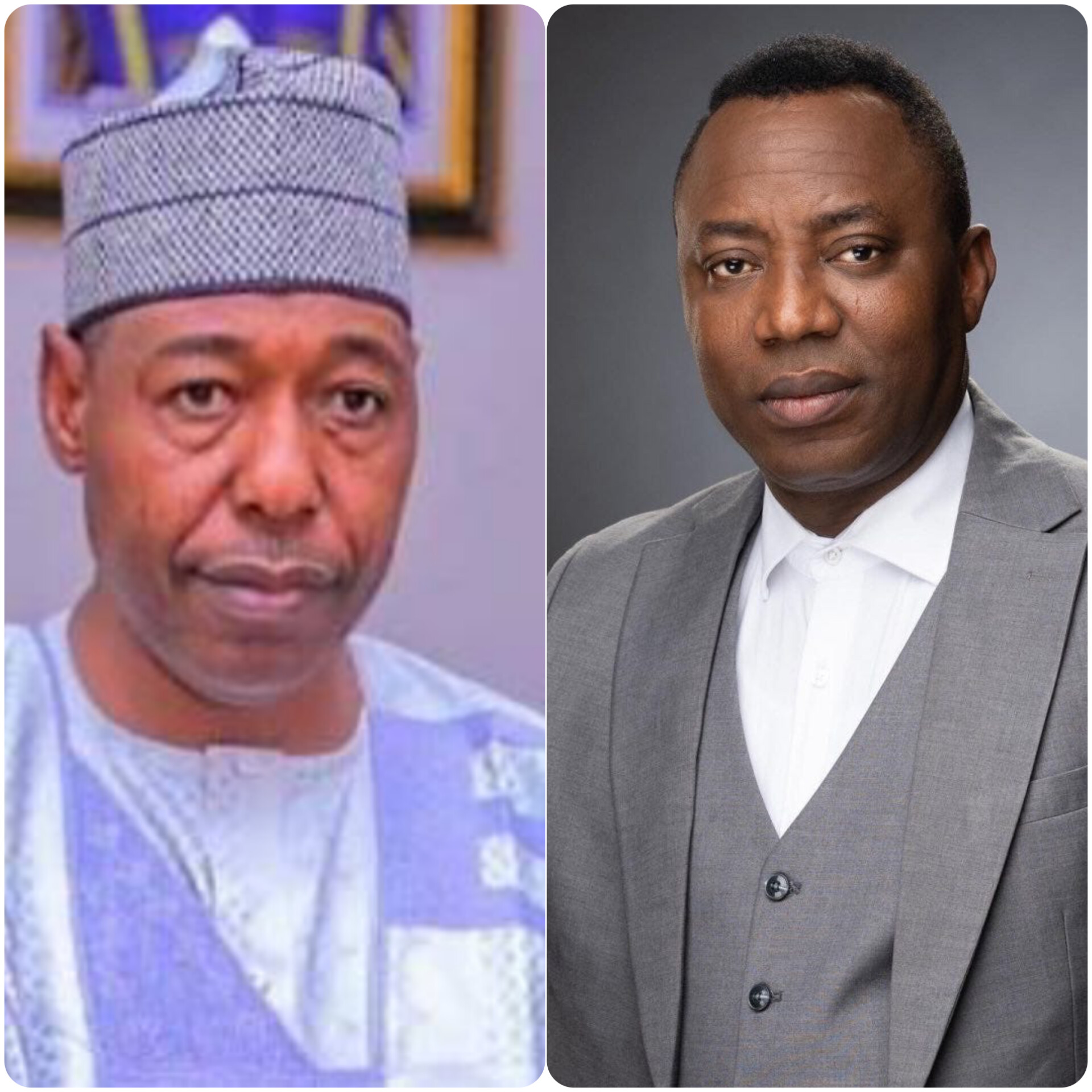
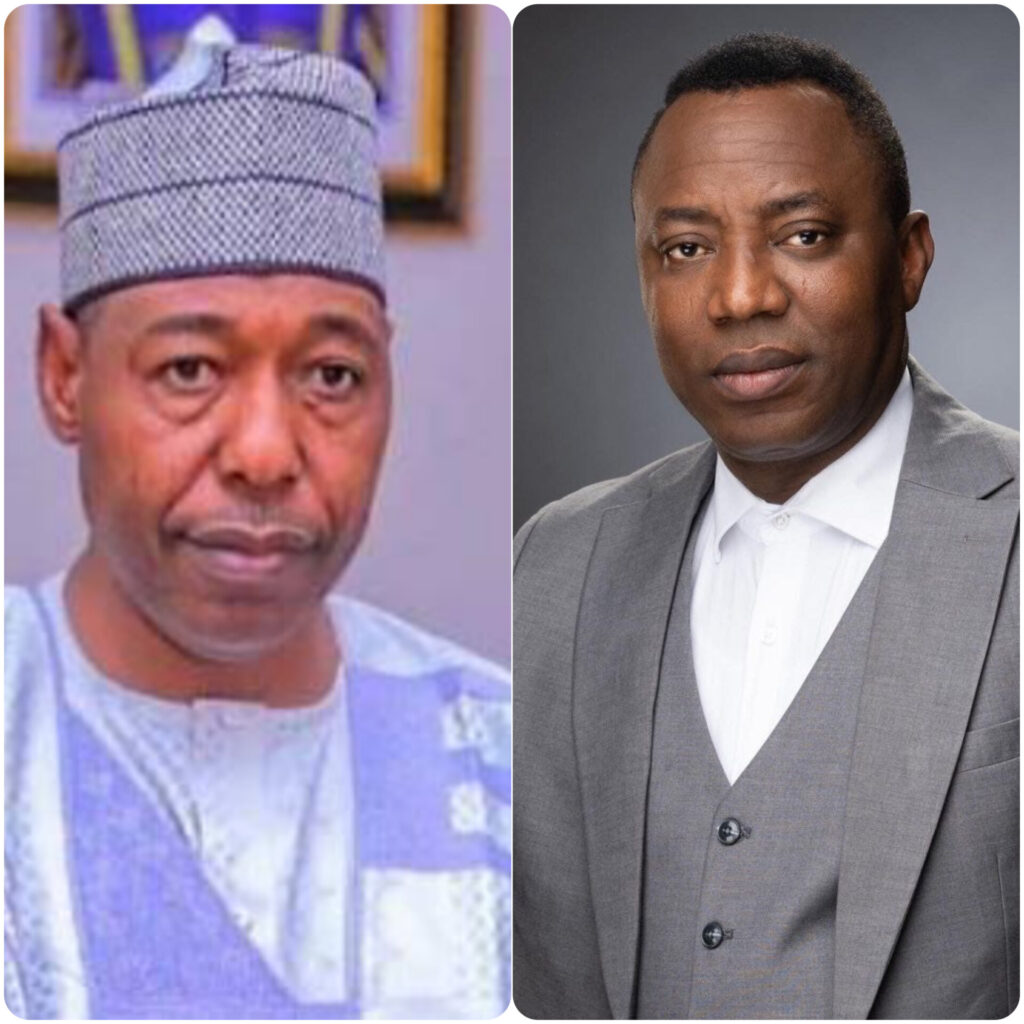
Sowore questioned Governor Zulum’s decision to spend ₦7 billion on the rehabilitation of “repentant” Boko Haram members.
Governor Zulum is once again at the centre of public scrutiny after activist Omoyele Sowore questioned the Borno State Government’s decision to spend ₦7 billion on the rehabilitation of “repentant” Boko Haram members. The report, published by SaharaReporters, has sparked renewed debate on transparency, insecurity, and the prioritisation of public funds.
Details of the ₦7 Billion Programme
According to the report, the ₦7 billion allocation was listed under the state’s programme aimed at demobilising and reintegrating former Boko Haram fighters. It is one of the most heavily funded capital projects in the Borno 2025 budget.
Sowore queried why such a huge amount was committed to former insurgents at a time when several communities in Borno continue to experience persistent attacks, displacement, and humanitarian challenges.
Sowore’s Concerns
Sowore argued that the rehabilitation spending has not translated into improved safety for citizens. He noted that:
- Insecurity remains widespread despite heavy financial allocations.
- The figures presented by the state government lack transparent auditing.
- Victims of terrorism appear to receive less attention compared to former fighters.
He further questioned Governor Zulum’s claim that Borno would spend about ₦100 billion on security in 2025, describing the figure as undocumented and lacking accountability.
Governor Zulum’s Broader Development Efforts
While the ₦7 billion controversy dominates headlines, the Zulum administration has also invested in reconstruction, resettlement and social services across the state. These include:
- Resettling displaced families back to their communities.
- Rebuilding infrastructure such as roads, water projects and public facilities.
- Allocations to education, health and social welfare as part of the 2025 “Budget of Recovery and Continuity.”
The Debate: Security vs. Rehabilitation
The controversy highlights a recurring dilemma:
Should government focus more on rehabilitating former insurgents, or prioritise victims and communities still struggling with trauma and insecurity?
Critics argue that Borno’s rehabilitation programme appears unbalanced, especially when communities continue to experience attacks. Supporters, however, maintain that reintegration is part of long-term peacebuilding.
What Nigerians Want to See
For the programme to gain public trust, citizens say the government must:
- Publish audited reports of all security-related spending.
- Demonstrate measurable results of rehabilitation efforts.
- Prioritise victims and communities that have suffered the most.
- Adopt a more transparent communication strategy about budget implementations.
Governor Zulum’s ₦7 billion rehabilitation spending has reopened national discussions on accountability, security strategy, and the ethics of reintegrating former insurgents. As insecurity persists in many parts of Borno, citizens insist that transparency and balanced prioritisation must guide every kobo spent in the name of peace and recovery.
Read also Police Stall Sowore’s Court Hearing Over Illegal ‘Wanted’ Declaration
1 thought on “Governor Zulum Under Fire Over ₦7 Billion Spent on Boko Haram Rehabilitation”
Comments are closed.