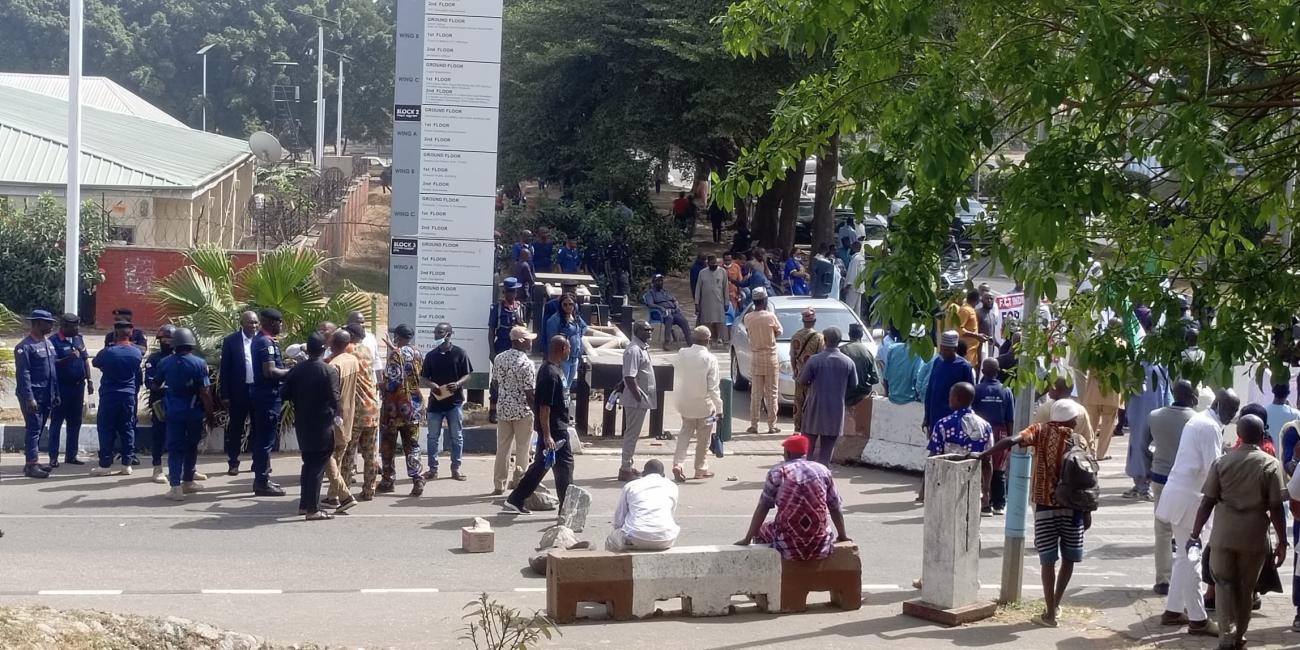
ABUJA — Tension erupted at the Federal Capital Territory Administration (FCTA) Secretariat on Monday after police officers allegedly acting on the orders of the FCT Minister, Nyesom Wike, tear-gassed a group of contractors demanding payment of outstanding contract debts amounting to ₦5.2 billion.
The contractors, who barricaded the entrance to the Minister’s office, said they were forced into protest after months of failed attempts to get the FCTA to release payments for projects they claim were completed, verified, and approved between September 2023 and May 2024.
According to the group, the outstanding amount totals ₦5,211,503,589.50, covering works such as drain clearing, sewage evacuation, school furniture supply, borehole drilling, and other maintenance projects carried out across the FCT.
Witnesses said the peaceful protest took a violent turn when police officers moved in and fired tear gas to disperse the contractors, some of whom sustained injuries in the ensuing chaos. Several protesters accused the Minister of withholding payments deliberately, describing the situation as “economic strangulation” and “financial punishment” for contractors who had fulfilled their obligations.
The contractors further alleged that many of their members have suffered severe personal losses due to the delayed payments, including foreclosed properties, medical complications, and deaths resulting from stress and financial hardship.
However, the FCTA has denied the allegations, insisting that the Minister did not award the contracts in question. According to the administration, the debts are part of inherited liabilities from previous governments and not new projects approved under Wike’s tenure. The FCTA added that documentation submitted by the protesting contractors did not correspond to contracts legally awarded by the current administration.
Monday’s protest follows earlier demonstrations in August, where the same group demanded settlement of the unpaid sum, saying their livelihoods had collapsed due to the prolonged delay.
The development adds to growing frustration among government contractors nationwide, many of whom say delayed payments have pushed them into bankruptcy and worsening socio-economic hardship.