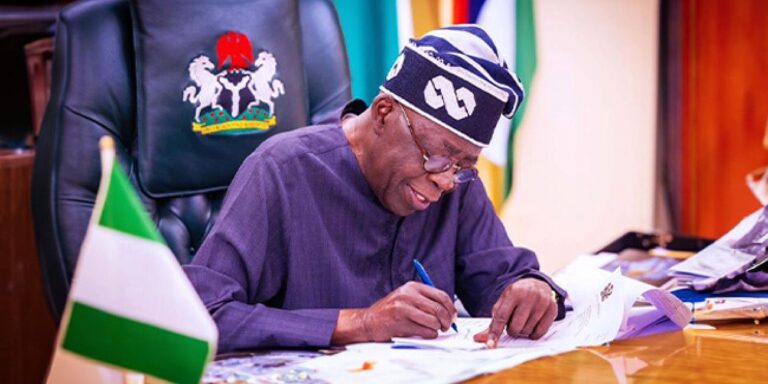
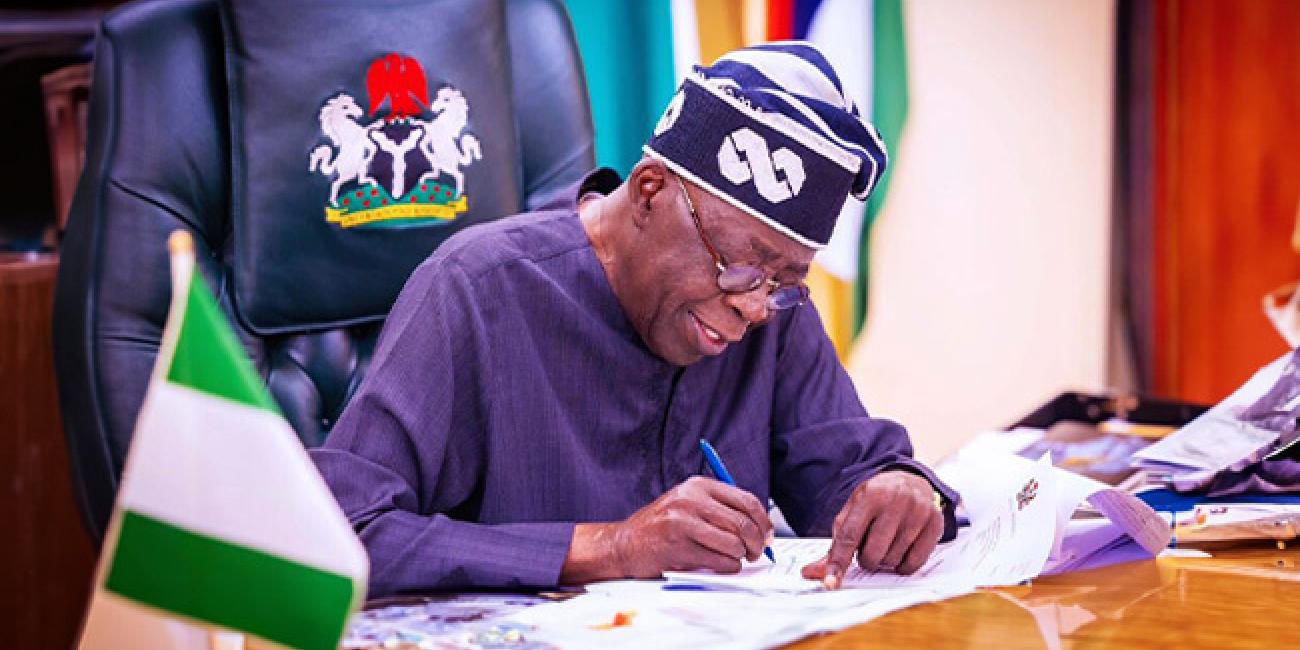
The 2026 budget adds ₦7 billion to the Presidential Villa solar project, following ₦10 billion spent in 2025, even as Nigerians face persistent power outages.”
The Federal Government under President Bola Ahmed Tinubu has budgeted an additional ₦7 billion for the solar power project at the Presidential Villa, Aso Rock, despite widespread electricity failures across Nigeria.
The new allocation is contained in the 2026 budget proposal, barely a year after the Tinubu administration earmarked ₦10 billion for the same solar power project in the 2025 budget, raising fresh concerns about government priorities amid persistent national grid collapse
According to budget documents, the ₦7bn allocation falls under the State House energy infrastructure projects, specifically for the expansion and completion of the solar mini-grid powering the Presidential Villa.
The latest funding brings the total public spending on the Aso Villa solar project to ₦17 billion within two years, at a time when millions of Nigerians continue to endure erratic electricity supply, prolonged blackouts, and repeated grid failure
The development has triggered public backlash, with critics questioning why the Presidency appears to be shielding itself from the failures of the national grid while ordinary citizens, businesses, hospitals, and schools struggle with unreliable power supply.
Nigeria’s national grid has suffered multiple collapses in recent months, plunging large parts of the country into darkness and forcing households and businesses to rely heavily on generators amid rising fuel costs
The Presidency has previously defended the solarisation of Aso Rock, describing it as a cost-saving, environmentally friendly, and long-term energy solution. Government officials argue that the project will reduce diesel consumption and lower operational costs at the Presidential Villa.
Officials have also compared the initiative to renewable energy projects adopted by government facilities in advanced economies, insisting that the move aligns with global energy transition goal
However, energy experts and civil society groups argue that the repeated spending on powering the Presidential Villa highlights the administration’s lack of confidence in Nigeria’s electricity infrastructure, while the broader power sector remains underfunded.
They note that a fraction of the ₦17bn already committed to Aso Rock’s solar project could significantly improve rural electrification, grid stability, or renewable energy access for underserved communities.
As power outages persist nationwide, pressure continues to mount on the Tinubu government to address Nigeria’s electricity crisis beyond symbolic projects and elite infrastructure.
For many Nigerians, the fresh ₦7bn allocation raises uncomfortable questions about equity, governance, and accountability at a time of economic hardship and rising living costs.