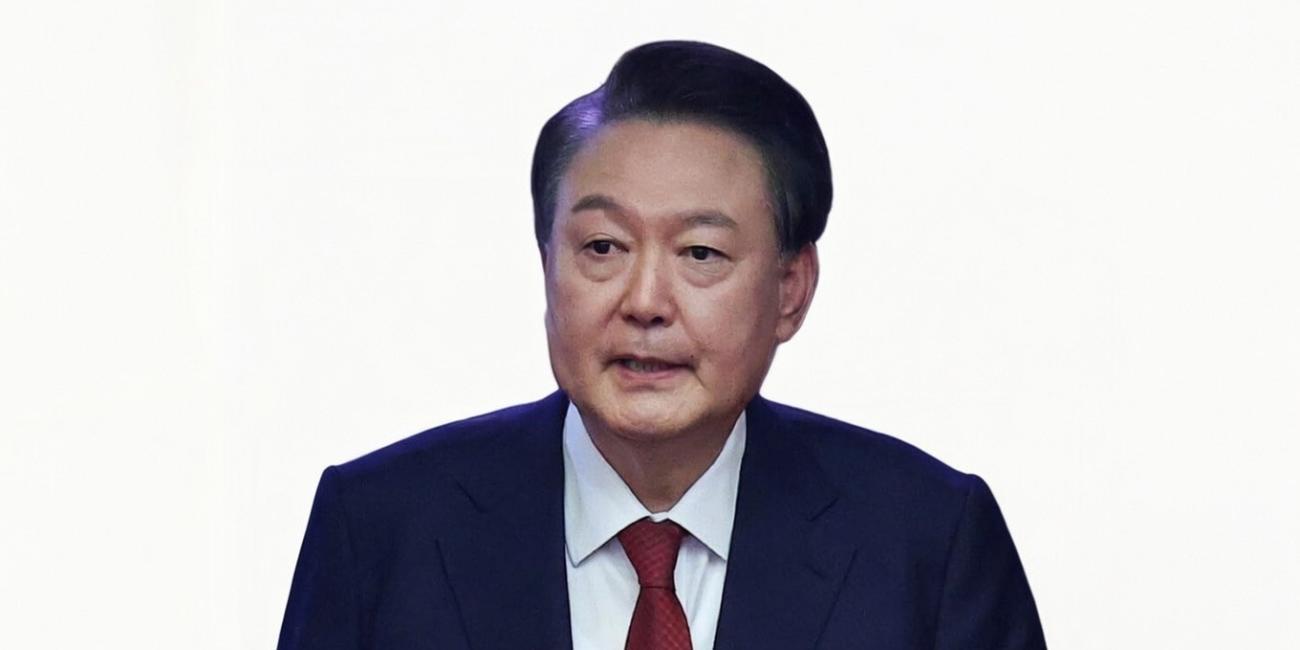
South Korean Seoul Court Hands Down First Jail Term Over Martial Law Crisis
Former South Korean President Yoon Suk Yeol has been sentenced to five years in prison by a Seoul court, marking a dramatic fall for the once-powerful leader and deepening one of South Korean’s biggest political crises in decades.
The ruling, reported by Sahara Reporters, is the first conviction in a series of criminal cases linked to Yoon’s controversial attempt to impose martial law in December 2024.
According to court findings, Yoon Suk Yeol was convicted on charges including obstruction of justice and abuse of presidential powers. The court ruled that the former president unlawfully interfered with law enforcement efforts and violated constitutional procedures during the brief but shocking martial law declaration.
Judges stated that Yoon’s actions posed a serious threat to South Korea’s democratic order and undermined public trust in state institution.
In December 2024, Yoon declared martial law amid rising political tensions, a move that sparked mass protests, condemnation from civil society, and swift action by lawmakers. South Korea’s parliament overturned the declaration within hours, describing it as unconstitutional.
The crisis eventually led to Yoon’s impeachment and removal from office in April 2025, making him one of several former South Korean leaders to face imprisonment after leaving power.
Yoon Suk Yeol has denied wrongdoing and is expected to appeal the five-year prison sentence. However, legal analysts say his troubles are far from over, as he still faces additional criminal trials, including more serious charges related to the alleged abuse of state authority.
If convicted in the remaining cases, the former president could face a significantly longer sentence.
South Korea has a history of holding former leaders accountable, with several ex-presidents previously jailed for corruption or abuse of power. Analysts say Yoon’s conviction reinforces the country’s strong judicial stance on protecting democracy, regardless of political status.
Read more BREAKING: Peter Obi, South-East Leaders Officially Join ADC In Enugu 31st