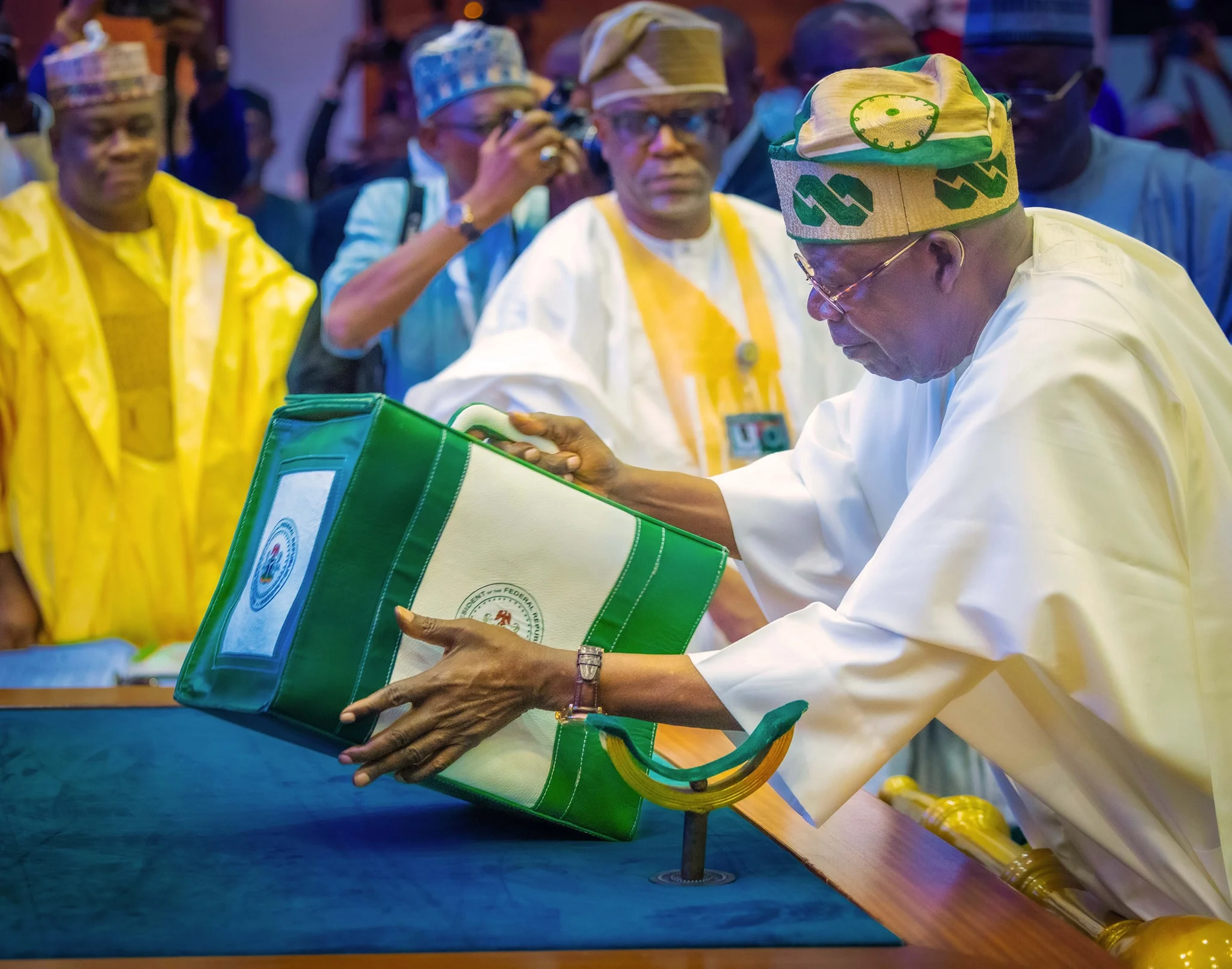
Tracka’s analysis of the FG proposed 2026 budget reveals billions earmarked for religious projects, sparking criticism amid Nigeria’s growing debt burden and calls for greater spending on healthcare, education, roads, and other essential services.
The Federal Government (FG) is facing widespread public criticism after documents from the proposed 2026 budget revealed an allocation of ₦8.05 billion for the construction, renovation, and equipping of churches and mosques across the country.
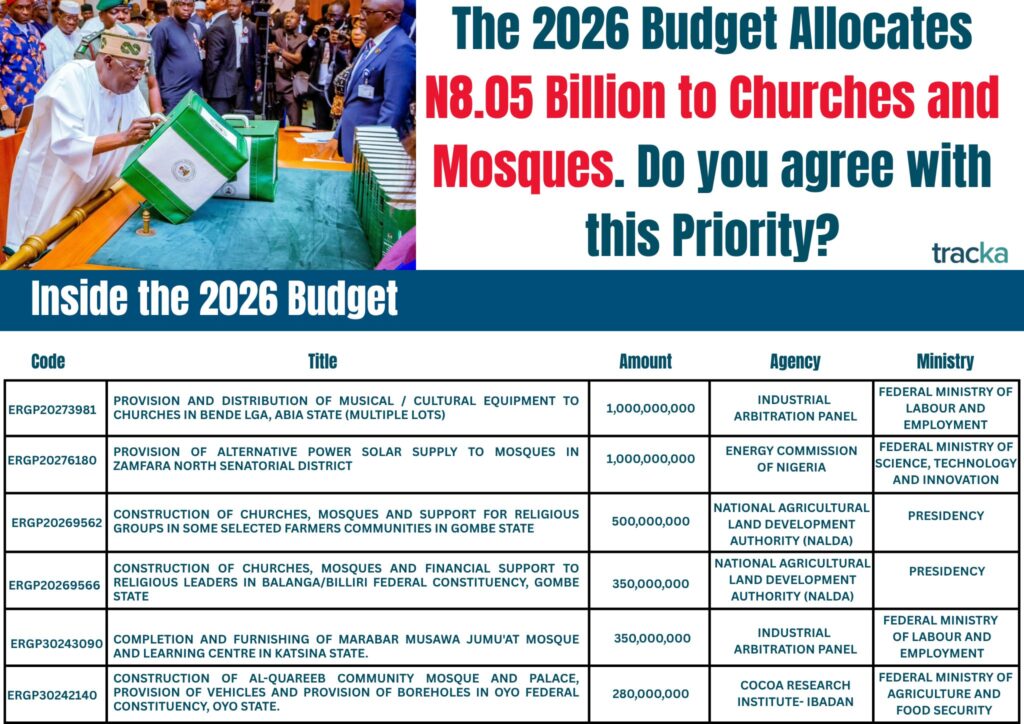
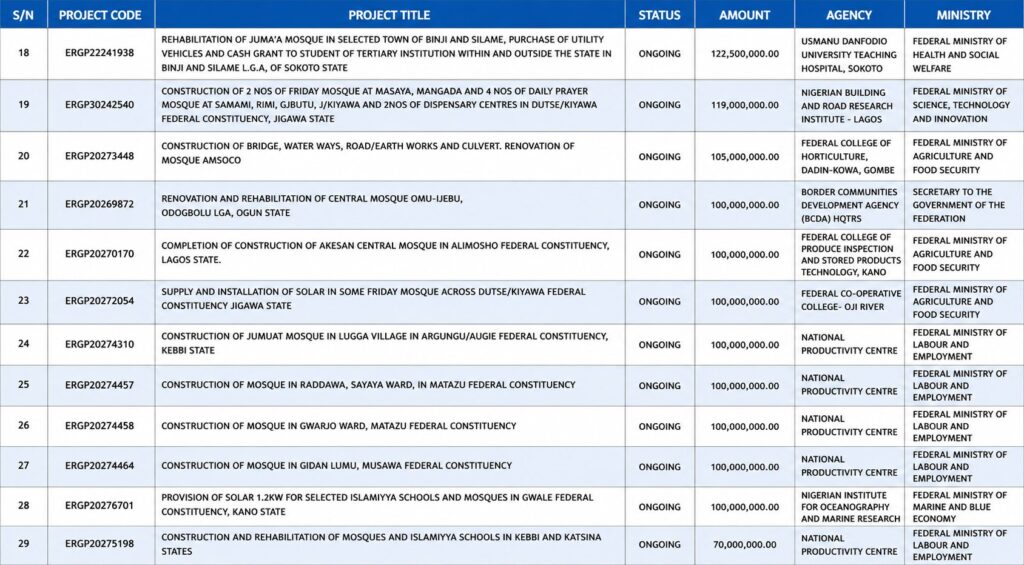
The allocation, uncovered by Tracka, a public accountability initiative of BudgIT, shows that ₦1.91 billion was earmarked for seven church-related projects, while ₦6.14 billion was set aside for 52 mosque projects.
According to the budget details by the FG, one of the projects includes ₦1 billion under the Industrial Arbitration Panel in the Federal Ministry of Labour and Employment for the provision and distribution of musical and cultural equipment to churches in Bende Local Government Area of Abia State.
Another ₦1 billion was allocated through the Energy Commission of Nigeria for the provision of alternative solar power systems to mosques in Zamfara North Senatorial District.
The budget also includes a combined ₦850 million under the National Agricultural Land Development Authority (NALDA) for the construction of churches and mosques, as well as financial support for religious leaders in Gombe State.
The revelations have sparked debate because they come as Nigeria grapples with significant economic challenges. The proposed 2026 budget carries a ₦31.45 trillion fiscal deficit, with the FG expected to rely heavily on domestic and external borrowing to finance the shortfall.
Tracka questioned whether spending public funds on religious infrastructure should take precedence over critical sectors such as healthcare, education, clean water, and road infrastructure, especially at a time of rising debt and limited fiscal resources.
Public policy analyst Gerald Moses Ede also criticized the allocations, arguing that borrowing to finance projects with little or no direct economic return does not reflect sound fiscal management.
Observers have also raised concerns over the placement of several religious projects under government agencies whose mandates are unrelated to religious affairs, describing it as a practice that could weaken transparency and accountability in public spending.
The allocations have since generated widespread reactions, with many Nigerians calling for greater scrutiny of the 2026 budget and urging the government to prioritize projects that directly improve citizens’ welfare.
Read also Fee: Federal Government to Introduce Mandatory Vehicle Recycling Fee from 2026