State and local government employees may need further clarification from their respective authorities, while private-sector workers, traders and self-employed Nigerians are not expressly covered by the agreement.
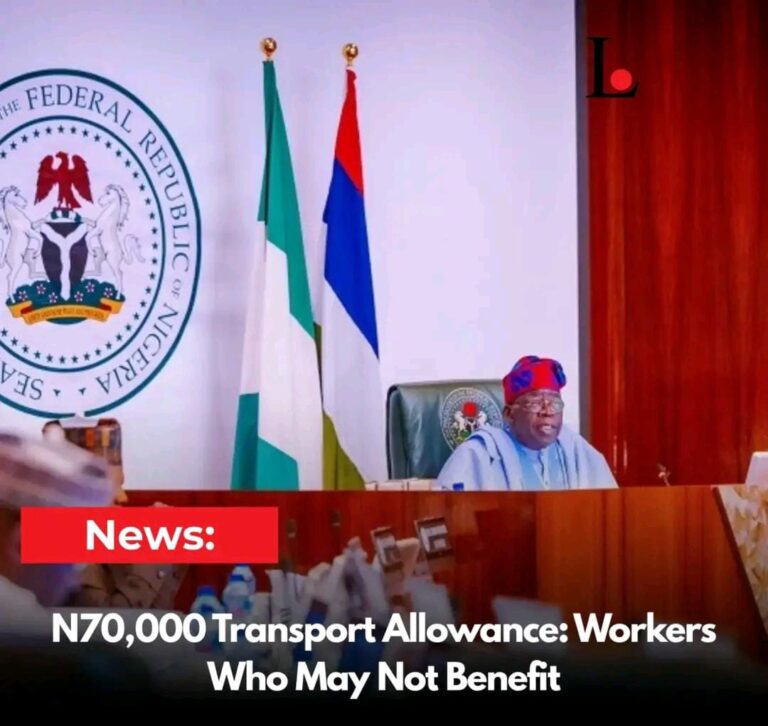
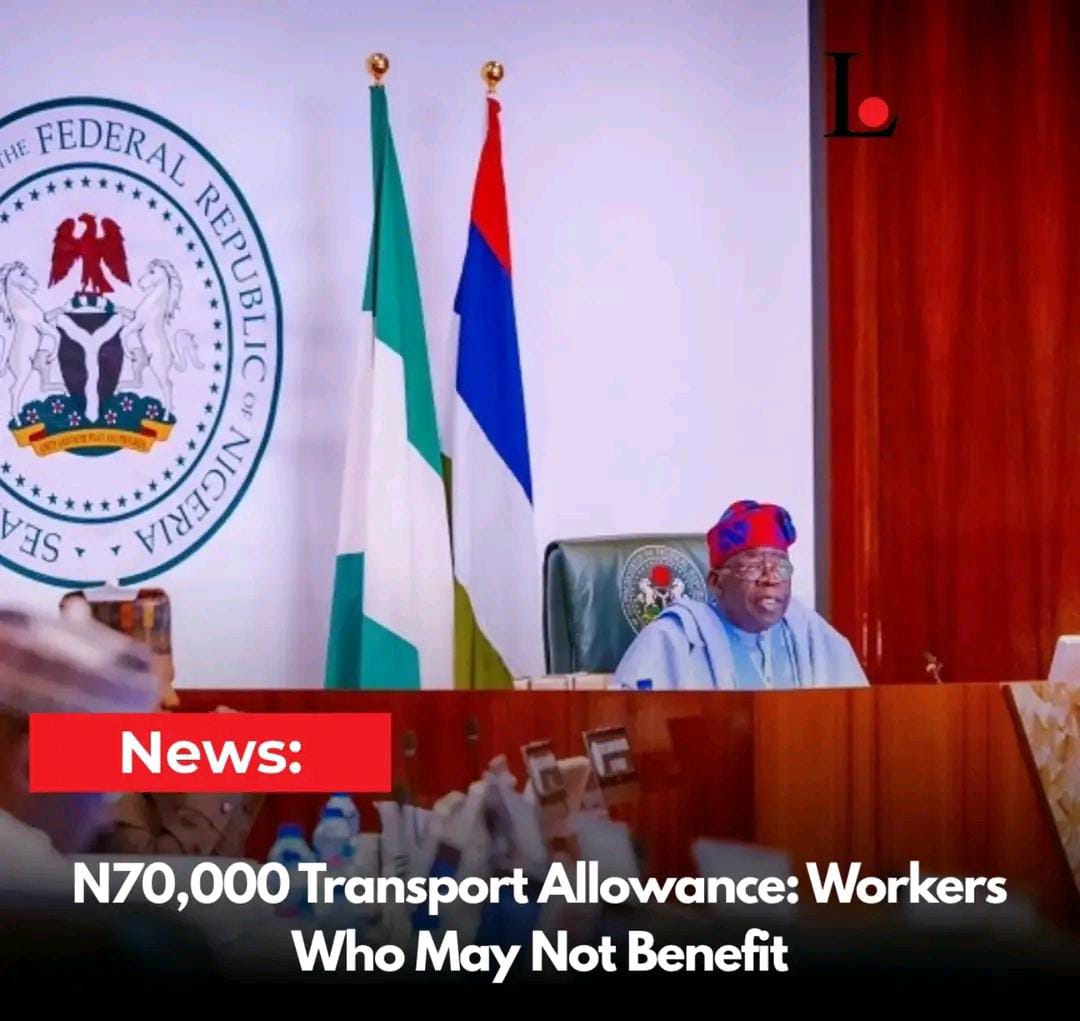
The Federal Government’s approval of a ₦70,000 monthly transport allowance for public service workers has raised questions about the categories of employees who may not benefit from the six-month intervention scheduled to commence in November 2026.
The agreement followed a conciliation meeting between the Federal Government and the Nigeria Labour Congress (NLC) in Abuja on Tuesday, October 27, 2026, to address workers’ welfare, rising living costs and outstanding labour demands.
According to reports, the intervention is intended to cushion the impact of increasing transportation costs and other economic pressures on workers. However, questions remain about its coverage, particularly for employees outside the Federal Government’s direct workforce.
State government employees may need to await further clarification from their respective state governments regarding their eligibility for the allowance.
Although the agreement calls on state governments to participate in the intervention, the implementation arrangements for state-level public servants have not been fully detailed. Consequently, workers in individual states may need official directives from their governments before the payment can be confirmed.
Local government workers are another category whose eligibility requires clarification.
The agreement encourages local governments to participate in the intervention, but the specific arrangements for implementing the payment across local government administrations have not been clearly established. Workers in this category should therefore look out for official announcements from their respective authorities.
Employees of private companies are not expressly identified as beneficiaries under the agreement between the Federal Government and the NLC.
The intervention arose from negotiations concerning public service workers’ welfare and does not establish a general requirement for private employers to pay the ₦70,000 monthly allowance. Private-sector workers would therefore need separate clarification or an applicable agreement before expecting the benefit.
Traders, artisans, small business owners and other self-employed Nigerians are also not expressly listed as beneficiaries of the intervention.
The agreement concerns public service-related support rather than a general cash payment for every Nigerian affected by rising transportation costs. As a result, people working independently or operating businesses outside the public service should not assume that they qualify for the allowance.
The Federal Government’s agreement with the NLC provides for a monthly transport intervention of ₦70,000 for six months, beginning in November 2026.
The memorandum of understanding also provides for payment of outstanding peculiar allowance arrears, effective from May 1, 2026, in three equal monthly instalments beginning in November.
However, the agreement does not provide complete details on the administrative arrangements, individual payment dates or the precise eligibility framework for every category of public servant.
State and local governments have been urged to participate in the intervention, while labour unions have been encouraged to pursue implementation within their respective jurisdictions.
The Federal Government and the NLC are expected to reconvene after one month to assess progress on the implementation of the resolutions.