Organised Labour Accuses Government Officials of Delaying Implementation, Threatens to Revisit Suspended Nationwide Strike
Tension is mounting between the Federal Government and organised labour following the government’s failure to implement the agreed N70,000 monthly transport intervention allowance for public servants, raising fears of another nationwide industrial action.
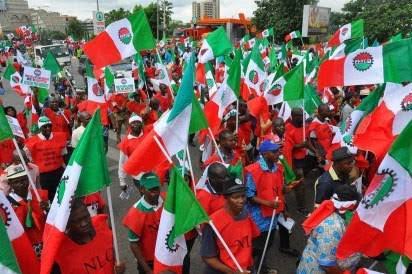
The Joint National Public Service Negotiating Council (JNPSNC), Trade Union Side, has threatened to reconsider the suspended nationwide strike, accusing key government agencies of frustrating the implementation of agreements reached with organised labour on October 27, 2026.
The council expressed displeasure that workers received their November salaries without the promised N70,000 monthly transport allowance, which was expected to run for six months, beginning in November 2026.
In a statement issued by its National Secretary, Gbenga Olowoyo, the council accused the Director-General of the Budget Office of the Federation and the Chairman of the National Salaries, Incomes and Wages Commission of delaying the implementation of the agreement.
The council alleged that although President Bola Ahmed Tinubu had approved the release of funds for the intervention, necessary administrative processes had not been completed to facilitate payment.
Beyond the transport allowance, organised labour also raised concerns over the non-implementation of the 40 per cent peculiar allowance associated with the N70,000 national minimum wage, including outstanding arrears dating back to May 1, 2026.
The council further accused the relevant authorities of delaying the establishment of the tripartite negotiation committee involving the Federal Government, organised labour and the Nigeria Employers’ Consultative Association (NECA), as agreed during the October 27 meeting.
On the health sector, the JNPSNC expressed concern over the delay in adjusting the Consolidated Health Salary Structure (CONHESS), alongside outstanding allowances owed to health workers.
It also faulted the delay in implementing agreed hazard allowances for agricultural professional officers and the failure to present proposed tax relief measures for public servants and private-sector operators to the National Economic Council for consideration.
The October 27 agreement was reached following negotiations between the Federal Government and organised labour to avert a nationwide strike after the expiration of a 14-day ultimatum issued by labour unions.
However, the latest development appears to have reopened tensions between both parties, with the council warning that continued failure to honour the agreement could undermine industrial harmony across the public service.
The JNPSNC disclosed that it would immediately commence mobilisation and sensitisation of workers nationwide, insisting that the government must fulfil its commitments without further delay.
The council maintained that Nigerian workers would not accept a situation where agreements freely entered into with the government were abandoned, warning that organised labour might have no option but to revisit the suspended nationwide strike.
The development comes amid growing concerns over the rising cost of living and the financial difficulties confronting Nigerian workers.