Cairo Leads the Continent as Lagos Remains Nigeria’s Most Populous City
As Africa’s urban population continues to expand at an unprecedented rate, the latest 2026 estimates reveal the continent’s largest metropolitan areas, highlighting the growing influence of African megacities in shaping the future of the region.
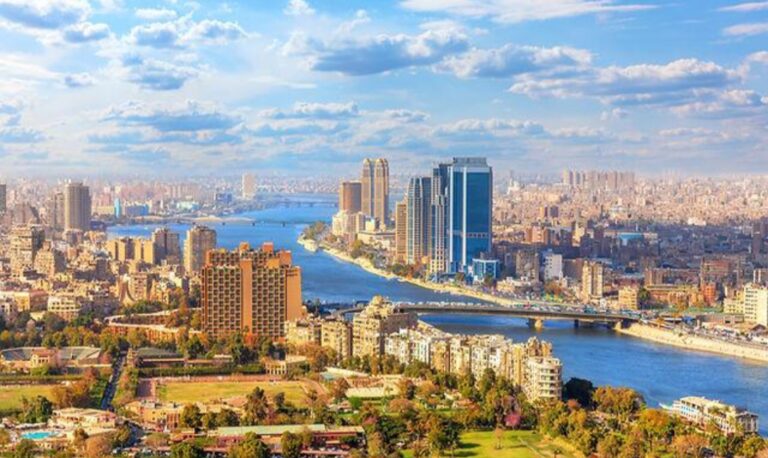
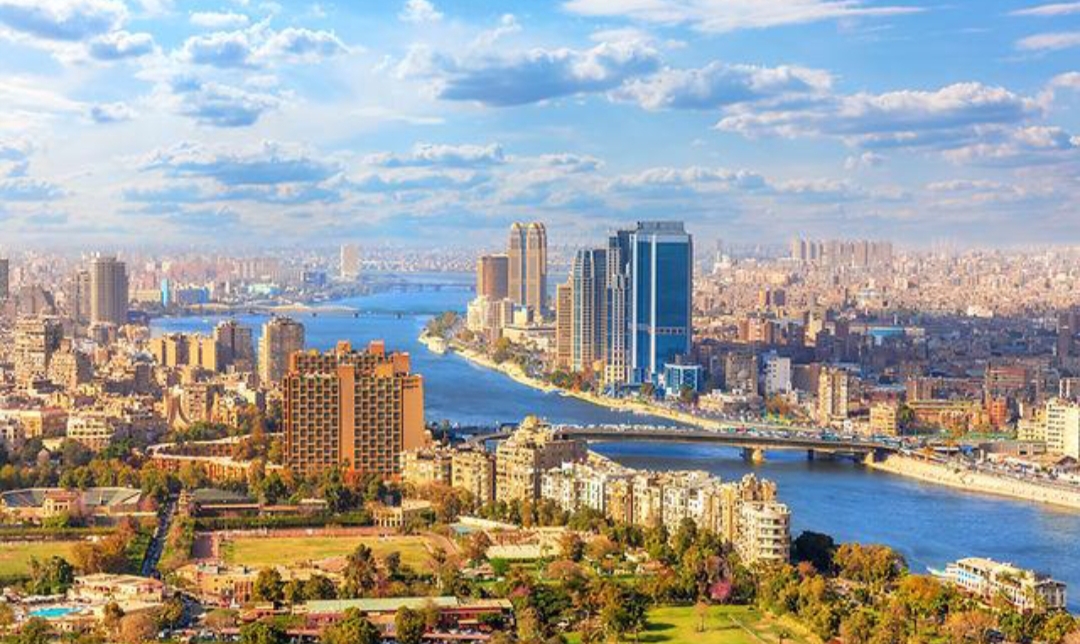
Egypt’s capital, Cairo, has retained its position as Africa’s most populous city, with an estimated population of 23.24 million residents. Nigeria’s commercial hub, Lagos, follows closely in second place with approximately 21.95 million people, reaffirming its status as West Africa’s largest urban centre.
The list also reflects the rapid urbanisation taking place across the continent, with cities such as Kinshasa, Johannesburg, Nairobi and Accra experiencing significant population growth.
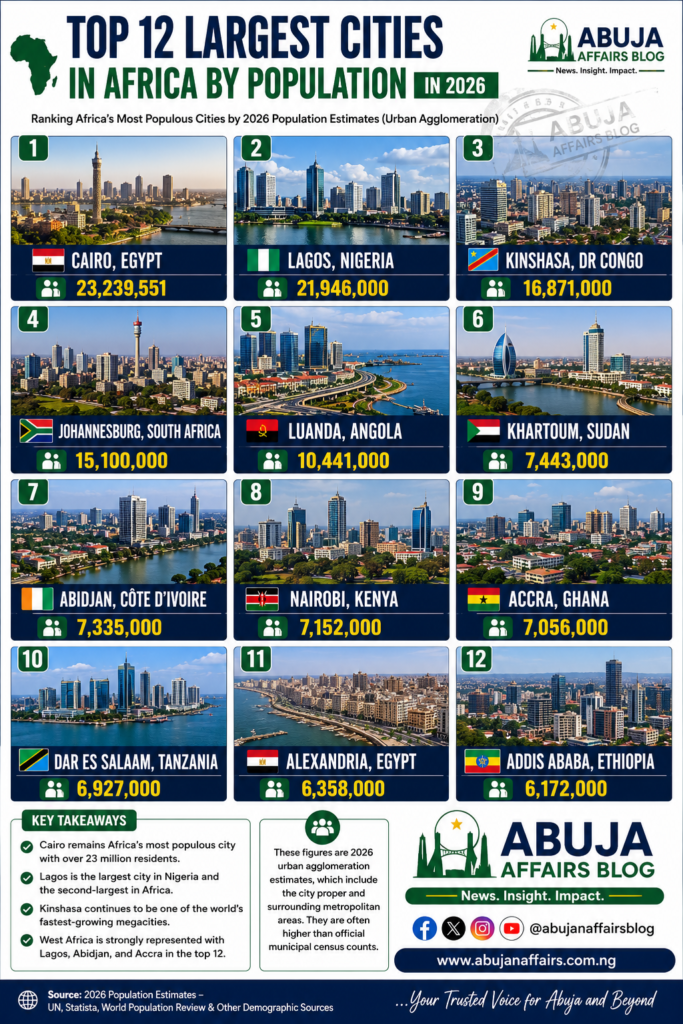
Top 12 Largest Cities in Africa by Population (2026)
- Cairo, Egypt – 23,239,551
- Lagos, Nigeria – 21,946,000
- Kinshasa, DR Congo – 16,871,000
- Johannesburg, South Africa – 15,100,000
- Luanda, Angola – 10,441,000
- Khartoum, Sudan – 7,443,000
- Abidjan, Côte d’Ivoire – 7,335,000
- Nairobi, Kenya – 7,152,000
- Accra, Ghana – 7,056,000
- Dar es Salaam, Tanzania – 6,927,000
- Alexandria, Egypt – 6,358,000
- Addis Ababa, Ethiopia – 6,172,000
What the Figures Mean
These figures represent urban agglomeration estimates, which include the population within the city proper as well as surrounding metropolitan areas that are economically and socially integrated with the city. Consequently, they are often higher than official municipal census figures.
As governments and city planners grapple with the realities of urban expansion, these megacities are expected to play an increasingly vital role in the continent’s economic development and global relevance.
Source: Population estimates based on 2026 urban agglomeration projections compiled from international demographic datasets.