Calls Grow for Legal Framework to Safeguard FCT Original Inhabitants as Stakeholders Demand Justice, Compensation, and Cultural Protection
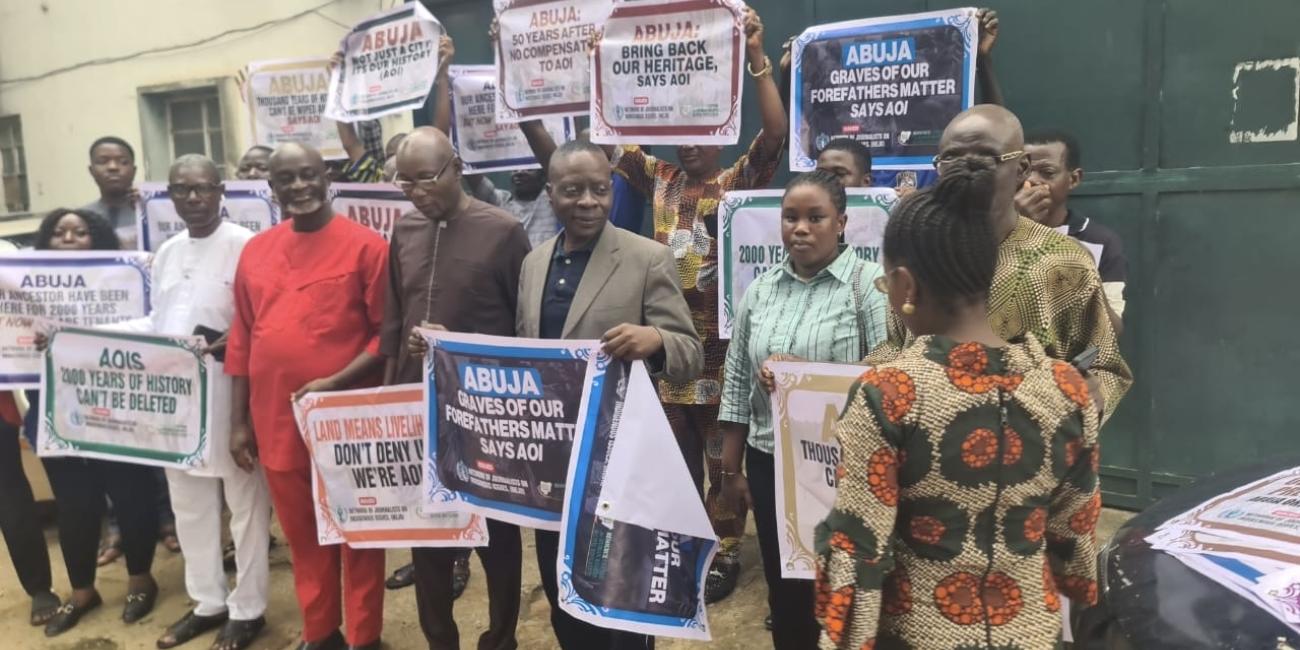
Concerned Nigerian journalists and civil society voices have called for the urgent enactment of a comprehensive law to protect the indigenous people of the Federal Capital Territory (FCT), Abuja, citing what they describe as over five decades of marginalization, displacement, and loss of ancestral lands.
The stakeholders made the appeal while reacting to longstanding grievances of Abuja’s original inhabitants, who argue that the development of Nigeria’s capital city has come at a significant social and cultural cost to indigenous communities.
According to the group, since the relocation of the nation’s capital from Lagos to Abuja in the 1970s, numerous indigenous families and communities have reportedly been displaced from their ancestral settlements to pave the way for infrastructural development, government buildings, and urban expansion projects.
They lamented that despite Abuja’s status as the seat of power, its original inhabitants remain without clear constitutional protection comparable to citizens of other Nigerian states, leaving them vulnerable to land loss and inadequate resettlement arrangements.
The journalists and advocacy voices are therefore urging the National Assembly and the Federal Government to introduce a dedicated legal framework that will guarantee the rights of indigenous communities in the FCT. This, they say, should include provisions for fair compensation, proper resettlement, and the preservation of cultural identity.
They further stressed that addressing the issue is critical to promoting fairness, inclusion, and national unity, especially as Abuja continues to expand as a fast-growing urban capital.
The call adds to ongoing national conversations around land rights, urban development, and the status of indigenous populations within Nigeria’s Federal Capital Territory.
Read also Full List: FCT 16 Chiefdoms with 17 Chiefs (Traditional Rulers)