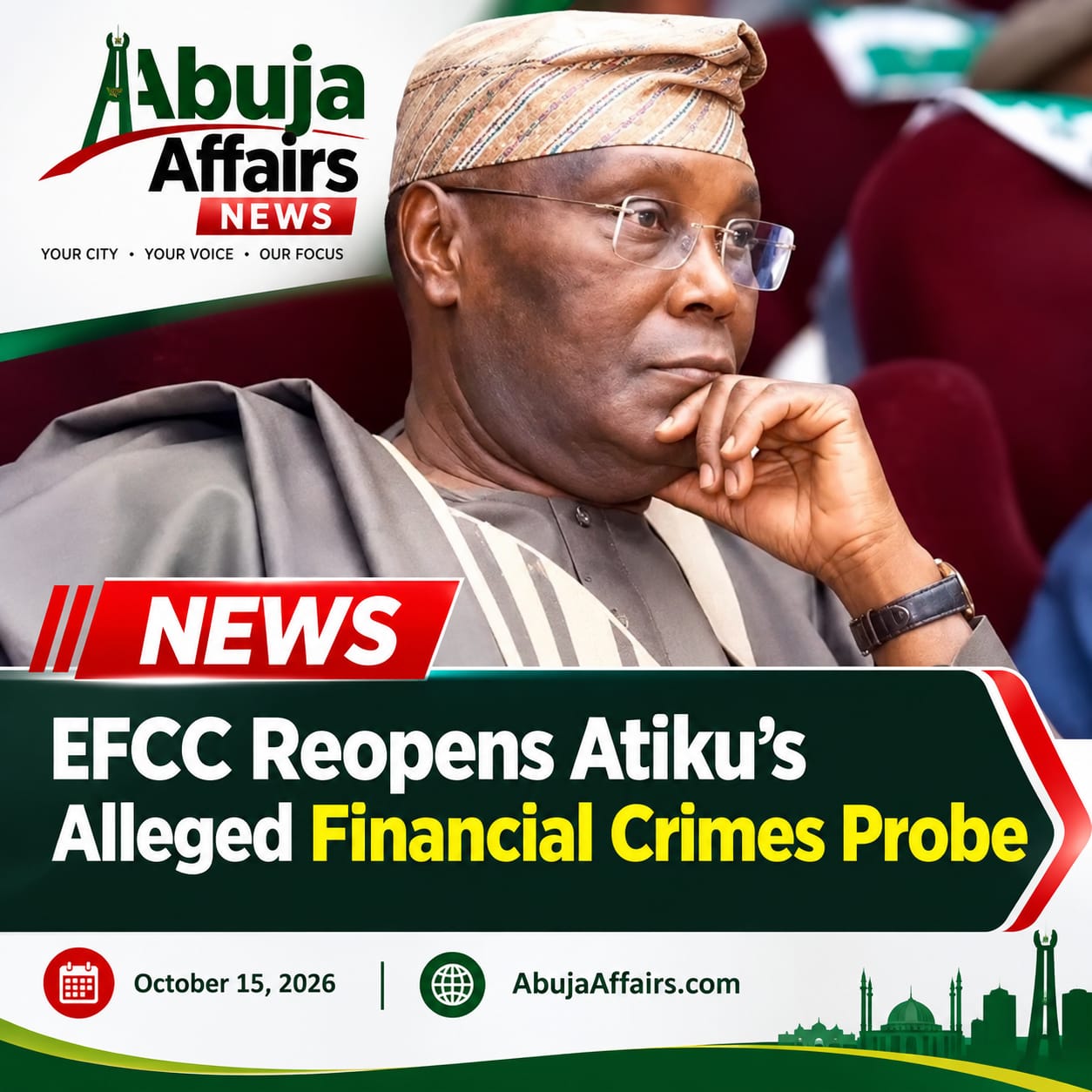
The Economic and Financial Crimes Commission (EFCC) has commenced a renewed investigation into allegations involving former Vice-President Atiku Abubakar following a petition by former lawmaker Ehiozuwa Johnson Agbonayinma, who is urging the commission to revisit findings from an earlier investigation dating back to 2006.
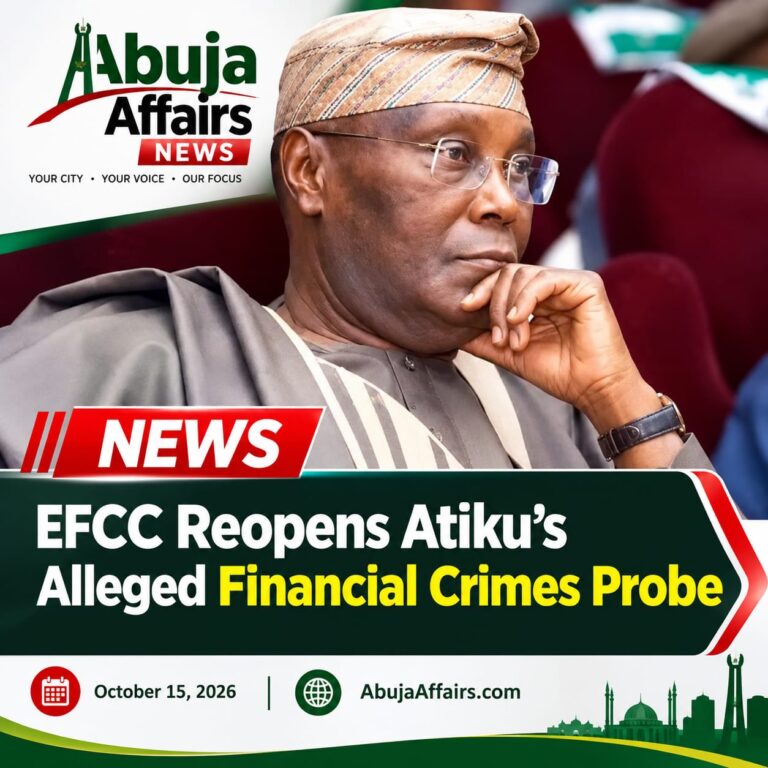
The Economic and Financial Crimes Commission (EFCC) has reopened its investigation into allegations of financial crimes involving former Vice-President Atiku Abubakar following a fresh petition submitted by former member of the House of Representatives, Ehiozuwa Johnson Agbonayinma.
The development follows a petition dated August 27, 2026, which was received by the anti-graft agency on September 1, 2026. The petition, submitted through Agbonayinma’s lawyer, Chief Hannibal Egbe Uwaifo, a Senior Advocate of Nigeria (SAN), calls on the commission to revisit allegations examined during an earlier investigation conducted under former EFCC Chairman, Mallam Nuhu Ribadu.
According to reports, the commission acknowledged receipt of the petition and confirmed that an investigation had commenced.
As part of the process, Agbonayinma appeared at the EFCC headquarters in Jabi, Abuja, on October 12, 2026, where he formally adopted the petition and responded to questions from investigators.
He reportedly arrived at the commission’s premises at about 9:58 a.m. and departed at approximately 4:07 p.m. after the interview.
The EFCC’s acknowledgement letter reportedly carries the reference number CR:3000/EFCC/HQ/SDC-2/VOL.3/398.
Agbonayinma is asking the EFCC to revisit its September 2006 investigation report concerning Atiku and consider findings contained in a February 4, 2010, report by the United States Senate Permanent Subcommittee on Investigations.
The petition seeks renewed scrutiny of allegations examined nearly two decades ago and calls on the commission to determine whether further investigative or legal action is warranted.
The former lawmaker has argued that the matter should not remain unresolved and that public officials, regardless of their political standing, should be subject to the law.
Speaking to journalists after his appearance at the EFCC headquarters, Agbonayinma reportedly said the case deserved attention in the interest of accountability and the rule of law.
He maintained that Nigerian laws should apply equally to wealthy and less privileged citizens, urging the commission to review previous investigative findings and determine whether they warrant further action.
Agbonayinma also disclosed that he had written to United States President Donald Trump concerning the allegations.
The renewed investigation concerns allegations that first attracted attention during the period when Ribadu headed the EFCC between 2003 and 2007.
Reports on the earlier inquiry have linked the allegations to questions surrounding the management and placement of funds associated with the Petroleum Technology Development Fund (PTDF), as well as transactions examined during investigations connected to a United States bribery inquiry.
However, the specific evidence being considered in the renewed investigation and the precise scope of the commission’s current inquiry have not been fully disclosed publicly.
As of the latest reports, the EFCC had acknowledged the petition and commenced investigative steps. However, the commission had not publicly announced any findings from the renewed inquiry or disclosed whether the investigation would lead to criminal charges.
Reports published on October 14 indicated that EFCC spokesperson Dele Oyewale had not responded to enquiries seeking further clarification at the time of publication.
Meanwhile, Atiku has previously rejected suggestions that the allegations established wrongdoing on his part. In a statement reported by TheCable on September 5, 2026, the former vice-president maintained that the matter had previously been examined by government institutions, including the EFCC, an administrative panel, the National Assembly and the courts.
Atiku stated that he had not been convicted by any court over the allegations and challenged anyone with credible evidence against him to present it through the appropriate legal process.
He also questioned why the matter was being revisited after many years.
The renewed investigation has once again drawn attention to longstanding questions about accountability, the handling of high-profile corruption allegations and the responsibility of anti-graft institutions to investigate complaints impartially.
The outcome of the investigation will depend on the evidence reviewed by the commission and any subsequent legal decisions by the appropriate authorities. Reopening an investigation does not establish guilt, and any allegations brought before a court must be proven in accordance with the law.
Abuja Affairs will continue to monitor developments and provide updates as further verified information becomes available.
Sources: Nigerian Tracker, Vanguard, THISDAY, TheCable