Presidential Initiative on CNG says new facilities in Abuja, Kano and other states will boost supply, reduce congestion and improve access to affordable alternative fuel for motorists.
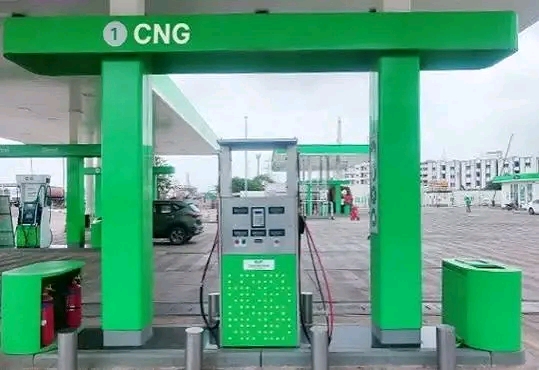
Nigeria’s queues at Compressed Natural Gas (CNG) refuelling stations are expected to reduce significantly before the end of 2026 as more facilities become operational across the country, the Presidential Initiative on Compressed Natural Gas and Electric Vehicles (Pi-CNG & EV) has said.
The Head of Brand and Communications at Pi-CNG & EV, Onyekachi Eke, disclosed this in an interview with The PUNCH, noting that additional refuelling stations were expected to open in Kano, Abuja and other states as the Federal Government intensifies efforts to expand access to alternative fuel.
Eke explained that some facilities were undergoing licensing processes, while others had already secured the necessary approvals to commence operations.
According to her, new stations are expected to become operational in different parts of the country, with additional facilities scheduled to open in Kano before the end of October.
She said Kano’s CNG infrastructure had expanded considerably, with the number of refuelling stations rising from virtually none to about 12, although she noted that the exact figure was still being confirmed.
Eke added that more facilities were also being developed in Abuja and other locations to improve access to CNG and reduce pressure on existing stations.
She acknowledged that long queues remained a challenge at some refuelling points but said the situation also reflected growing interest among motorists in converting their vehicles to run on CNG.
The initiative expressed optimism that the commissioning of additional stations would significantly ease congestion before the end of the year.
The development follows President Bola Tinubu’s directive for the rollout of an additional 500 CNG refuelling stations nationwide, bringing the planned total under the presidential initiative to 1,000.
The expansion is part of the Federal Government’s broader strategy to promote cheaper alternative energy for transportation and reduce the financial burden on motorists and commercial transport operators following the removal of the petrol subsidy.
The government has promoted CNG as a more affordable alternative to petrol, with potential savings on fuel costs for vehicles converted to use the gas.
Meanwhile, the Chief Operating Officer of Pi-CNG & EV, Tosin Coker, said the first batch of additional infrastructure assets was expected to begin arriving soon.
Coker clarified that the deployment was being handled in partnership with the Midstream and Downstream Gas Infrastructure Fund, rather than directly by Pi-CNG & EV. The assets must undergo the necessary clearance, delivery and installation processes before becoming operational.
The Federal Government has continued to invest in CNG infrastructure, including refuelling stations, vehicle conversion centres and other facilities intended to support the nationwide transition to alternative energy.
The success of the expansion will depend on how quickly the new facilities become operational and whether their increased capacity can adequately meet the growing demand for CNG across Nigeria.